

Check Book: Big Game, Big Trailers
Plus, JJ talks (even more) about Kevin


IN THIS WEEK’S EDITION:
THE BARDI PARTY REPORT
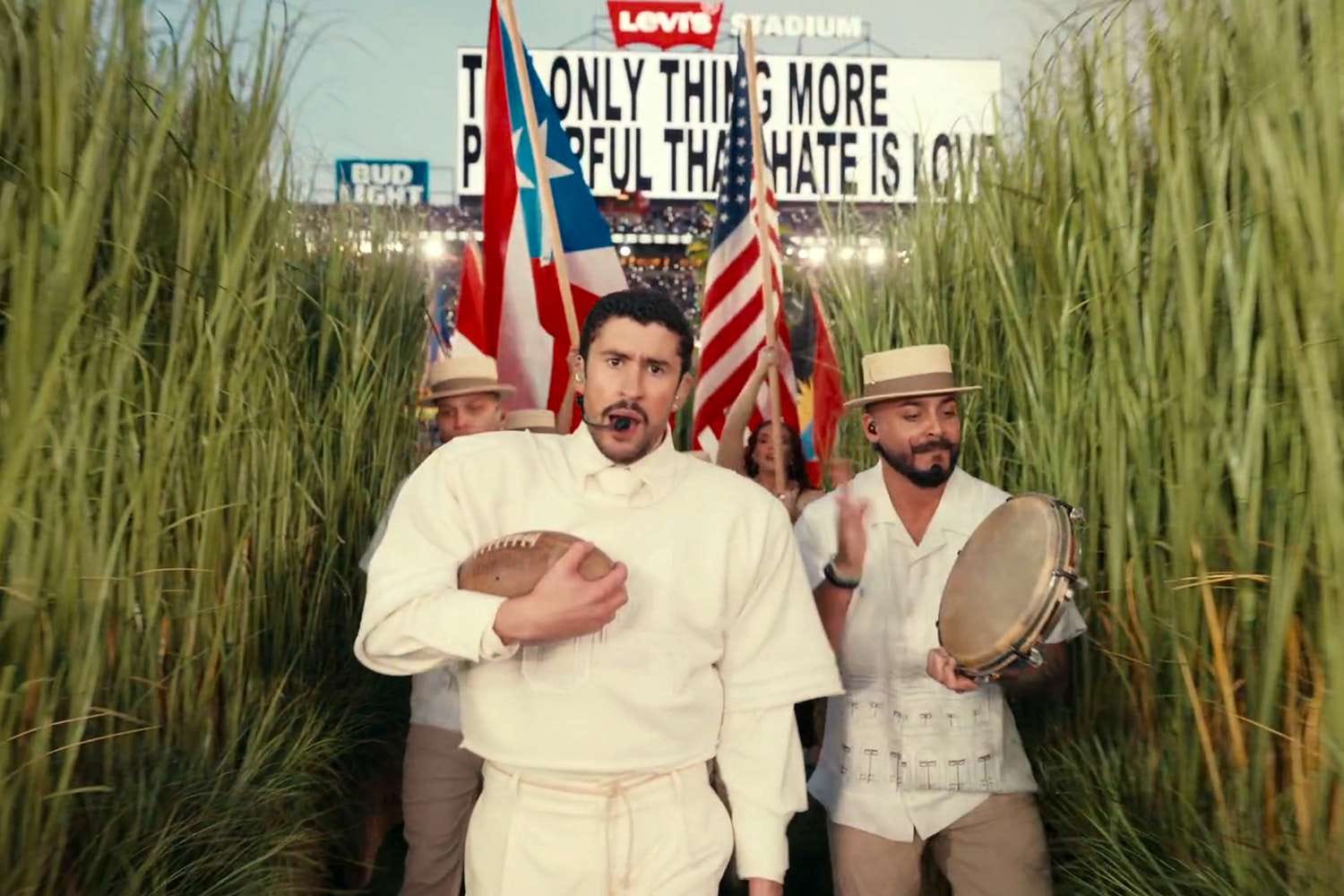
BIENVENIDOS AL INFORME DE BARDI PARTY! What a thrill it was to watch el espectáculo de medio tiempo del Súper Tazón!!! Bad Bunny pulled off probably the most ingenious, well-directed, heart-stirring, socially provocative halftime show ever last night, starting with sugar cane plantations and ending with me and my husband tearing up and yelling MEXICOOOOO from our couch as Benito recited a litany of the countries and cultures that make up the Americas. We got a Spike Lee dolly shot, an actual wedding, a really daring crowd surfing moment, 500 people dressed as bushes, 15 seconds of Daddy Yankee’s “Gasolina,” all of which added up to 12 minutes of “joy as resistance” art. Just a beautiful celebration of community and culture and what we used to characterize as the American dream.
According to Eric Kohn, the halftime show was creative directed by Bad Bunny collaborator STILLZ, whose debut feature Barrio Trieste played at NYFF in October and will hit theaters sometime this year. The live broadcast was directed by veteran live event director Hamish Hamilton (who directs EVERYTHING - Super Bowls, Oscars, Grammys, Emmys, etc), and the production was overseen by Bruce and Shelley Rodgers of TRIBE, who have produced every Super Bowl Halftime since Prince. The logistics of producing the Halftime show are fascinating and honestly make me break out in stress hives - I recommend you read this deep-dive from Wired that breaks down all of the restrictions and creative solutions implemented in this year’s show.
As for the BIG GAME TRAILERS, which is I guess is a more relevant BC-related subject…here are my thoughts:
SCREAM 7
Sure. Whatever. I have no attachment to this franchise, I think the other attempts at marketing this movie have been depressing as hell, and I stand with Melissa Barrera.
THE SUPER MARIO GALAXY MOVIE
This should barely count as a teaser. I guess Baby Mario is cute?
SUPERGIRL
This one technically aired during the Puppy Bowl, which I think is smart. Anyway, love Krypto, excited for more Krypto.
PROJECT HAIL MARY
I’m sure this will be good. I liked Ryan Gosling throwing a football into the giant donut. People who know more about football than I do characterized that as a terrible throw, but I don’t care. Anyway, I will say that when this spot aired last night, my husband said, “Wait, why is Sandra Huller explaining to him what ‘Hail Mary’ means in this context? Feel like his character would know that. Lazy screenwriting.”
DISCLOSURE DAY
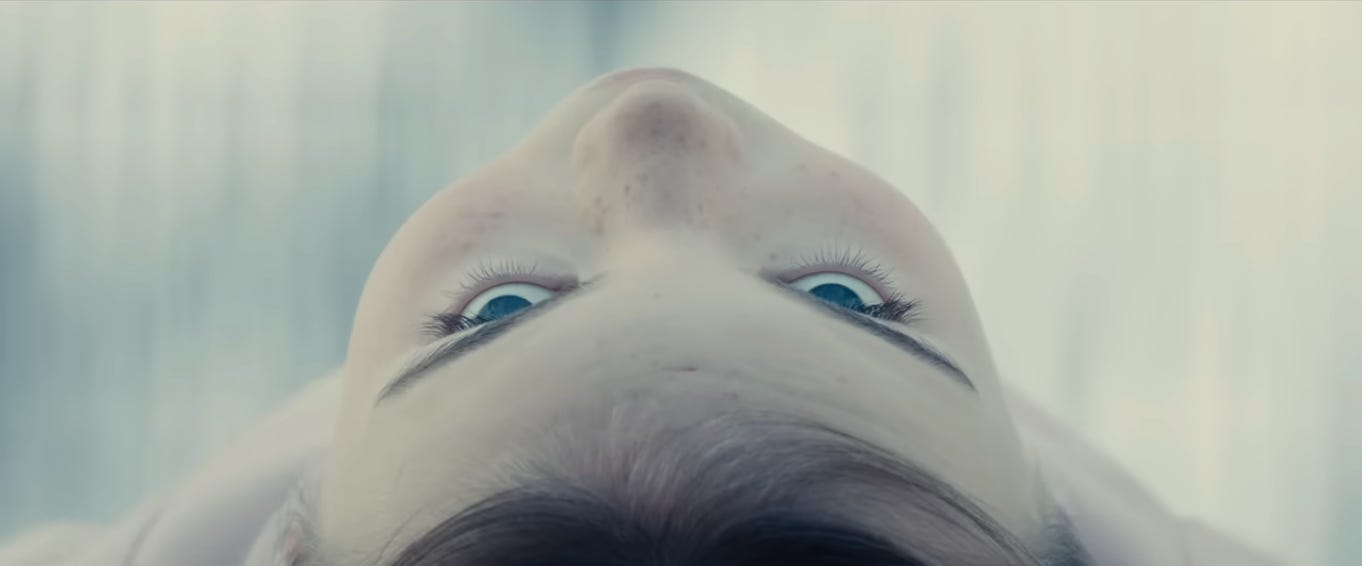
I’m nervous. I don’t want to be nervous. I want to love this movie and I want it to make a billion dollars. But I’m nervous. Something feels off. I liked this shot:
THE MANDALORIAN AND GROGU
BET YOU THOUGHT IT WAS A BUDWEISER AD. BET YOU THOUGHT THOSE TAUNTAUNS WERE CLYDESDALES! NOPE! IT’S BABY YODA AND HE’S IN A LITTLE CARRIAGE.
MINIONS & MONSTERS
Okay, so what actually aired during the Super Bowl was an unbroken shot of a Minion running towards the camera, which I will always love. I didn’t know about the concept of this new Minions movie, so I was excited to learn that the Minions would be making their own movie here. Feels Muppet-y. Did you guys know that I love the Minions? Love them.
THE ADVENTURES OF CLIFF BOOTH
So this was the big one. The big surprise. I let out a big yelp when I realized what this was. I don’t know, guys. I think I’m in the minority here when I say that I don’t think this looks great. MY PERSONAL OPINION is that it looks flat and dark, and maybe David Fincher’s aesthetics are not the best match for Tarantino’s material, and I remain incredibly skeptical of this project as a whole. David Sims thinks it looks good, so feel free to trash me in the comments.

LET’S CRACK OPEN THE DOSSIER
Wouldn’t It Be Loverly
When director Lynne Ramsay signed on to adapt Alice Sebold’s novel The Lovely Bones in the year 2000, the book was still nearly two years away from being published to wider audiences. Ramsay had received a very early—and notably incomplete—galley copy of the novel from FilmFour’s Jim Wilson, who thought the Ratcatcher director would pair well with the promising material, little of it there was. As Ramsay revealed to fellow filmmaker Michael Winterbottom, she “was sent, maybe the first three or four chapters, not the whole thing,” and she “thought there was something super interesting there.”1 In these stages, Ramsay compared her adaptation—which was co-penned by Morvern Callar’s Liana Dognini, who would sadly pass away from a sudden illness shortly after the duo exited Lovely Bones—to “Hamlet, with the father trying to prove the murderer’s identity.”2 Ramsay was, according to a 2006 Variety article, initially unaware of the novel’s second half turn to sentiment and religiosity, instead planning to follow the more grounded story she believed the first few chapters were setting up.3
But nearly from the moment Ramsay and Dognini turned the focus of their attention to The Lovely Bones, the project kept running into trouble. The film hit its first major speed bump just two months after Morvern Callar premiered at the 2002 Cannes Film Festival: in July 2002, Channel 4 ended production company FilmFour’s run as a standalone operation, reintegrating much of its team into the British network’s drama department and leaving the future of the project uncertain. That same month, Sebold’s full novel hit store shelves, quickly becoming a surprising word-of-mouth hit. With FilmFour shuttered—and with few public updates offered on Ramsay’s adaptation—the sharks were out to snatch the project away from Channel 4, including, according to Variety, one Steven Spielberg. But, in October 2002, Channel 4 executive Mark Thompson announced that the project had merely been shifted over to the channel’s new in-house film unit, and that Ramsay was still firmly attached to direct.4
However, Ramsay could already sense the very real trouble looming. As she told RSA Journal while promoting Morvern Callar in 2002, the success of the book had its drawbacks: “It’s good that people are definitely interested in the book, but I don’t think they’re particularly interested in the fact that I’m making it.”5 But Ramsay—as you might expect, given that she is, you know, Lynne Ramsay—remained committed to her vision, telling The New York Times that the “bottom line is I’ve got to do it my way. I don’t think too much about what the book’s become for people.”6 And her way was still limited to the scope of the early passages she initially read: “The book is quite epic and takes place over about 20 years, whereas our script will be more the pure idea of the book over the timespan of a year.”7 (As she would later tell the Times in 2012, “I really didn’t like the My Little Pony, she’s-in-heaven, everything’s-O.K. aspect.”)8
In May 2003, Variety reported that Ramsay and Dognini were finally set to turn in their first draft of the script, which Channel 4 would then shop around to potential co-financiers, with a potential summer shoot looming.9 By July 2003, a producer was attached: Aimee Peyronnet, who coincidentally also signed a two-year first-look deal with DreamWorks. Actually, according to Variety, it wasn’t that coincidental, as the trade publication viewed it as a move that might eventually bring The Lovely Bones over to Hollywood.10 And at this point, the ambient tension raised by the book’s success was now very real pressure applied to Ramsay from the film’s producers: “[I]t was a strange thing where it felt more and more like what I was doing with the book wasn’t really what people really wanted. There was just much more pressure to make it exactly like the book, which I didn’t think was going to work. I wanted it to be a loose adaptation.”11 Nonetheless, Ramsay and Dognini plugged away at their script: “We wrote on that a couple of years …. We just felt we were handing in endless drafts… Where it wasn’t quite like the book that everyone knew and loved at that point. So, that was frustrating for a while.”12
The writing was decidedly on the wall for Ramsay once Peter Jackson—fresh off the outsized success of The Lord of the Rings trilogy, hard at work on his reimagining of King Kong—started circling the book months later. As she told IndieWire in 2011, “When Peter Jackson started sniffing around the project — I mean, he’s the biggest director in the world. Him and Spielberg. I’m just Lynne Ramsay. So it just went a bit awry.”13 By April 2004, Ramsay was officially out of the director’s chair, with Variety reporting that Jackson—along with his creative partners Fran Walsh and Philippa Boyens—would likely soon replace her and Dognini as screenwriters, too.14 It was a bittersweet exit for Ramsay, who was proud of the work she and Dognini had done: “I thought the script I wrote was beautiful but was made to doubt that when people got greedy.”15
After Jackson’s misbegotten adaptation surfaced in 2009, Ramsay—of course—was not quiet about how she felt about the film. In The Guardian, she stated, simply, “I don’t think it is a good film in the end.”16 More colorfully, to Indiewire: “I saw that chiller-thriller. Absolutely awful.”17 And, from the top rope, in The New York Times: “I’m surprised he took so long with the script. It’s completely like the book. It should’ve taken two weeks to write. You know?”18 Despite the conviction projected in those quotes, Ramsay was initially shaken by her experience on the project: “I think my confidence took a wee bit of a kicking. If you feel you have made a great piece of work, which the script for The Lovely Bones was, and that it suddenly means nothing, it’s like being in the land of the lost. You don’t know what’s good or bad and what anything means. I was knocked for six for about a year.”19 It was not, dear readers and listeners, the last time something like this would happen to—or because of—Lynne Ramsay.
Swapping Screenwriters
In May 2006, Variety reported that Ramsay was teaming up with BBC Films to adapt normal author Lionel Shriver’s 2003 novel We Need to Talk About Kevin. Curiously, this initial announcement claimed that Ramsay was co-writing the film’s screenplay with Robert Festinger, a former HBO Films reader who had co-written the screenplay for 2001’s In the Bedroom with Todd Field.20 Festinger, however, did not ultimately receive a credit on the film, and Ramsay did not mention him in any of the interviews I read.
Instead, Ramsay ended up co-writing Kevin’s screenplay with her then-husband Rory Stewart Kinnear—yes, the man she married near the Cannes-adjacent porn shoot in 2002. Unlike Festinger, Kinnear had no writing credits to his name, but that didn’t stop him from taking the initiative himself, as Ramsay revealed to Interview: “Well, it was kind of crazy. He’s a musician and basically he’d written a script independently of me. He was really shy and showed me after he’d done the whole thing, and it was really good. He reads a lot of novels, classics. So it was a weird one because he showed it to me, and I was like, ‘You’ve got a lot to learn, you’re writing too much like a book,’ but he reads everything that comes through my door, so he learned a lot. He said I was the best film school he went to. But I’m sure we wanted to beat each other up a few times. It wasn’t romantic all of the time.”21 Kinnear has not received a writing credit since, though he was briefly attached to Mobius, Ramsay’s long-in-the-works Moby Dick-adjacent outer space project.22 (More to come on that one in a future newsletter, I’m sure.) In the years following Kevin’s release, Ramsay and Kinnear would divorce. Shortly after, Ramsay decamped for the small Greek island of Santorini, where she met a chef from Belarus, with whom she would soon welcome a daughter—her fist and only child.23 It wasn’t romantic all of the time, but sometimes it was.
He Makes My Heart a CinemaScope Screen
In many ways, Ramsay felt that Kevin was much more conventional than her first two features. As she told The Guardian, “It’s my big exercise in uber-structure.” This was partly due to the nature of the adaptation: “It had to be because I knew from the start that the letters [from the novel] were not going to work in a film the way they worked in Lionel’s novel. They just weren’t visual.” But the budget—which was slashed in half once original production company Summit backed out—also brought constraints: “[It] imposed a certain order. We honed the script down to the bare bones. It was tight as a drum and, even then, because of the lack of money, I had to take out some scenes that I really love. It was kind of heartbreaking, but that’s how film-making seems to be for me.”24 (Never mind that the budget far exceeded the combined budgets of Ramsay’s previous work.)
But Kevin was still, of course, a Lynne Ramsay film, so convention was flouted in good measure, too. Most notably, Ramsay and her cinematographer Seamus McGarvey opted to shoot the film in CinemaScope, a widescreen format typically reserved for bigger budgets (and more stunning vistas). But Ramsay wanted to shoot in ’Scope for a clear purpose: it allowed her to “do two shots instead of one single.” And though the initial investment was bigger, Ramsay claimed this stylistic choice actually brought down the budget by decreasing the total number of shots required: “[I]t … saves a lot of time and money because of the size of the frames. I could make the war between Kevin and Eva in the frames.” Plus, to Ramsay, Kevin was an “epic in the every day,” its tragic story more than meriting the widescreen treatment.25
Though it wasn’t the structure she ultimately employed, Ramsay also considered adopting a very different—and even more unorthodox—approach to shooting the film. As lead actress Tilda Swinton told The Guardian, she and Ramsay once discussed “shooting away from Kevin, so you never saw him, in a similar way to Jaws,” and—unbeknownst to Swinton and Ramsay—in the way Mary Bronstein ultimately approached last year’s If I Had Legs I’d Kick You.26

WHAT IS THE TEAM INTO THIS WEEK?
David Sims, Host: “I do not really RECOMMEND doing a Haneke January which is what I did this month (going through the Umbrella box set) but it did confirm for me that I find the early ones a smidge overrated and Code Unknown deeply underrated!!”
AJ McKeon, Editor: “Sour Patch watermelons”
Alan Smithee, Pseudonymous Editor: “You know what rocks (pun intended)? Curling. Every four years, I fall back in love with it. Any Blankies who know a place in the New York metro area where I, a non-curler, can learn to curl, please let me know.”
JJ Bersch, Researcher: “If you find yourself in need of bonus Olympics content once you run out of luge runs to watch—or if, in a few weeks, you find yourself going through Olympics withdrawals—I’d recommend heading over to the Criterion Channel, where the films from its massive 100 Years of Olympics Films box set are currently streaming. Among them, two stand tallest: first, there’s Kon Ichikawa’s absolute masterpiece Tokyo Olympiad, a pioneering work of sports photography that will leave you in awe of the full capabilities of cinema and the human form: it is, my opinion, one of the movies that the movies were made for. (Pair it with Happy End’s 1971 album Kazemachi Roman, the other great artwork to come out of the 1964 Summer Games.) Second, you gotta check out Tony Maylem’s White Rock, the one-of-a-kind film made for the 1976 Winter Olympics in Innsbruck. Among its many merits are a starring turn from James Coburn, who walks viewers through the intense thrills inherent to each sport; abstract action photography rivaling the best work of Michael Mann; and an absurdly sick score from Yes keyboardist Rick Wakeman.”
Marie Bardi, Social Media: “I recommend Italian skater Matteo Rizzo’s free skate from yesterday’s Team Event, scored to the music from Interstellar. Made me tear up. Viva Italia!!!”

THIS WEEK ON THE PODCAST
The time has come for us to talk about Kevin. The New Yorker’s Jia Tolentino joins us to talk about Lynne Ramsay’s depiction of every parent’s worst nightmare - 2011’s We Need To Talk About Kevin.
MEANWHILE ON PATREON…..
We visit the Murch corner and have a proverbial Murch spotlight, if you will, as we discuss Walter Murch’s only directorial effort (excluding one episode of The Clone Wars), 1985’s Return to Oz.

AND ON CRITICAL DARLINGS:
Richard and Alison put on their beekeeper suits and are joined by Marie Bardi-Salinas to buzz about Bugonia.

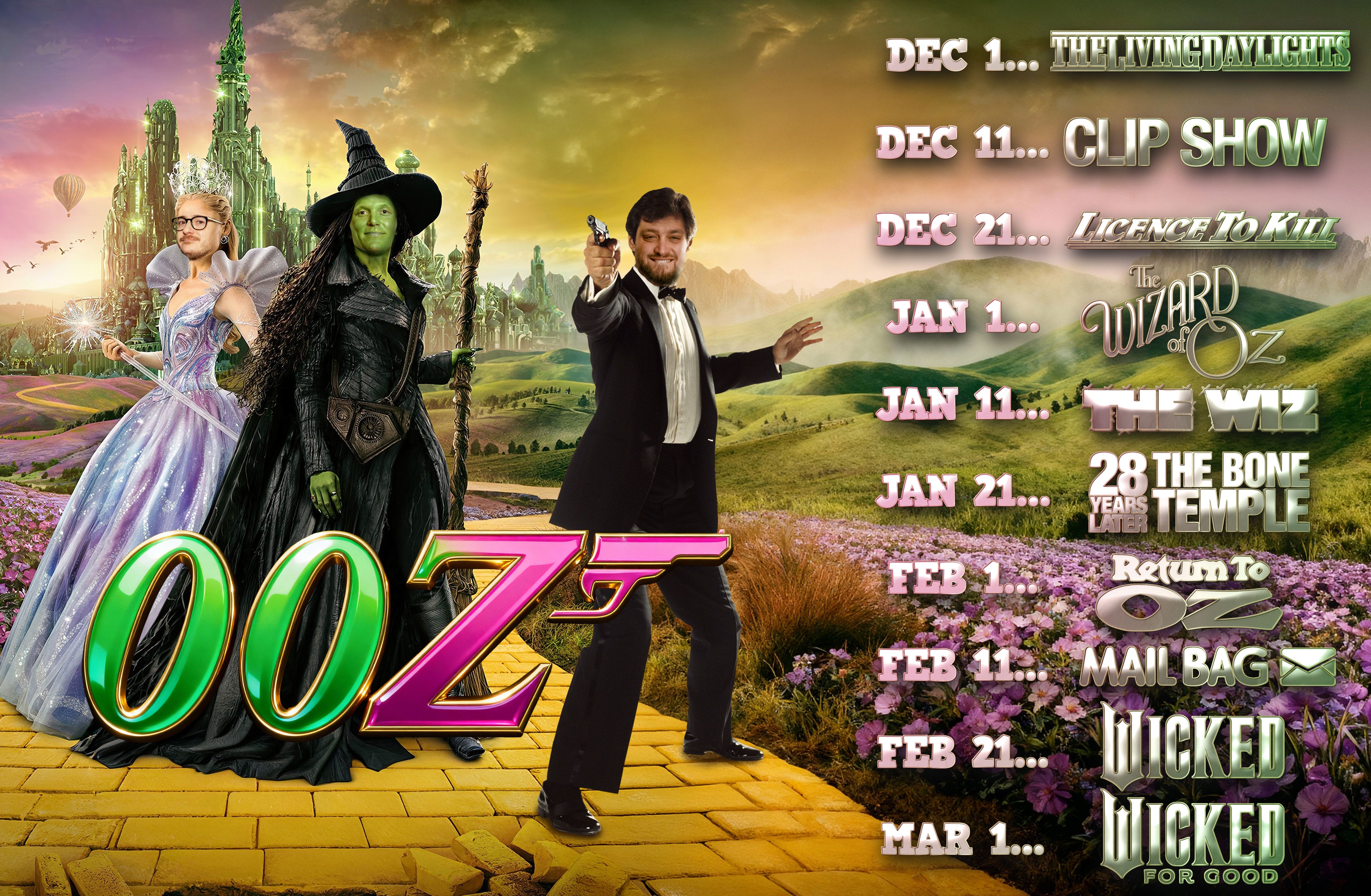
COMING SOON:
Michael Winterbottom, Dark Matter: Independent Filmmaking in the 21st Century, 117.
The Film Verdict, April 15, 2024.
Variety, May 21, 2006.
Variety, October 13, 2002.
RSA Journal, October 2002.
New York Times, December 26, 2002.
Variety, October 13, 2002.
New York Times, January 13, 2012.
Variety, May 15, 2003.
Variety, July 6, 2003.
Winterbottom, Dark Matter, 117.
Ibid., 119.
IndieWire, May 14, 2011.
Variety, April 22, 2004.
Variety, May 18, 2010.
The Guardian, May 14, 2011.
IndieWire, May 14, 2011.
New York Times, January 13, 2012.
The Guardian, October 1, 2011.
Variety, May 20, 2006.
Interview Magazine.
The Hollywood Reporter, October 2, 2012.
Vice, March 13, 2018.
The Guardian, October 1, 2011.
The Film Stage, January 27, 2012.
The Guardian, October 11, 2011.
🙌🙌🙌🙌🙌
“I’m surprised he took so long with the script. It’s completely like the book. It should’ve taken two weeks to write. You know?”
God, I love Ramsey